



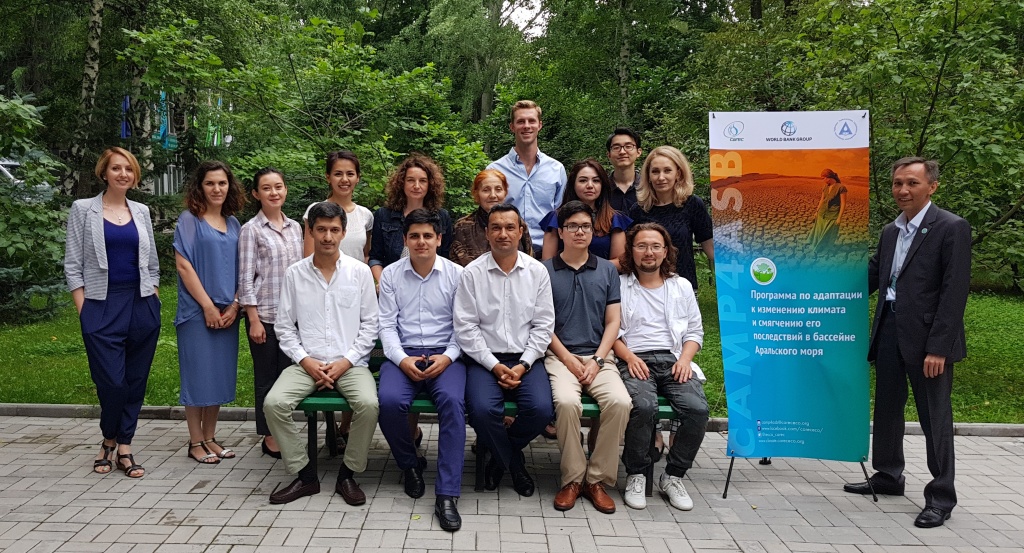
 The representatives of the project implementation groups of the CAMP4ASB project from Rural Restructuring Agency under the Ministry of Agriculture and Water Resources of the Republic of Uzbekistan, the Ministry of Finance of the Republic of Tajikistan, the Committee for Environmental Protection under the Government of the Republic of Tajikistan attended the trainings.
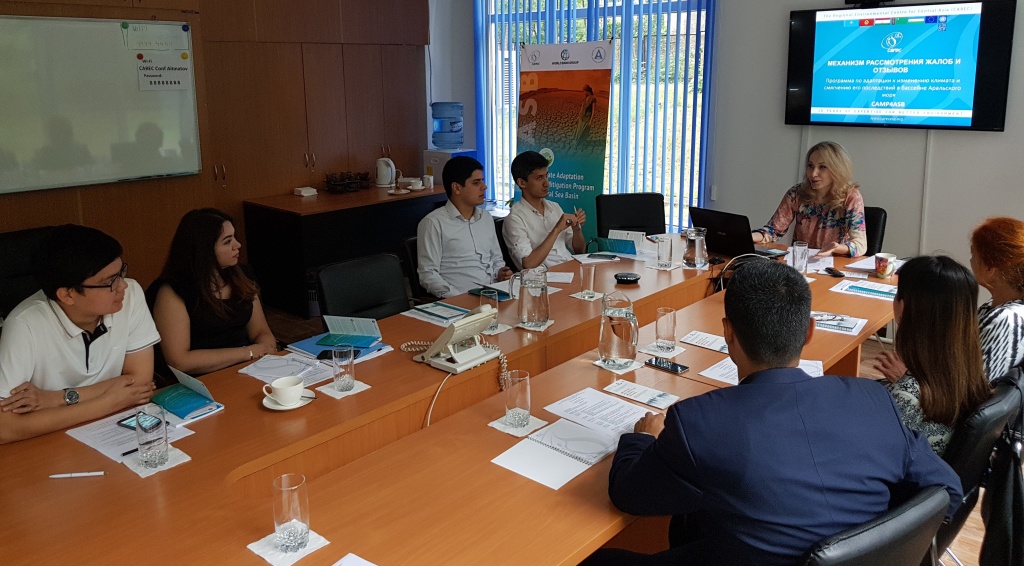 In the interactive session/training on GRM the participants learned about steps in the development, implementation and follow-up of the Grievance Redress Mechanism at the level of national and regional components of the project. A part with "questions-answers" was also very active, where participants could ask their questions, exchange experience of implementation of the GRM in their countries and discuss issues from a practical point of view.
The CAMP4ASB M & E training provided an overview of the final system results matrix, 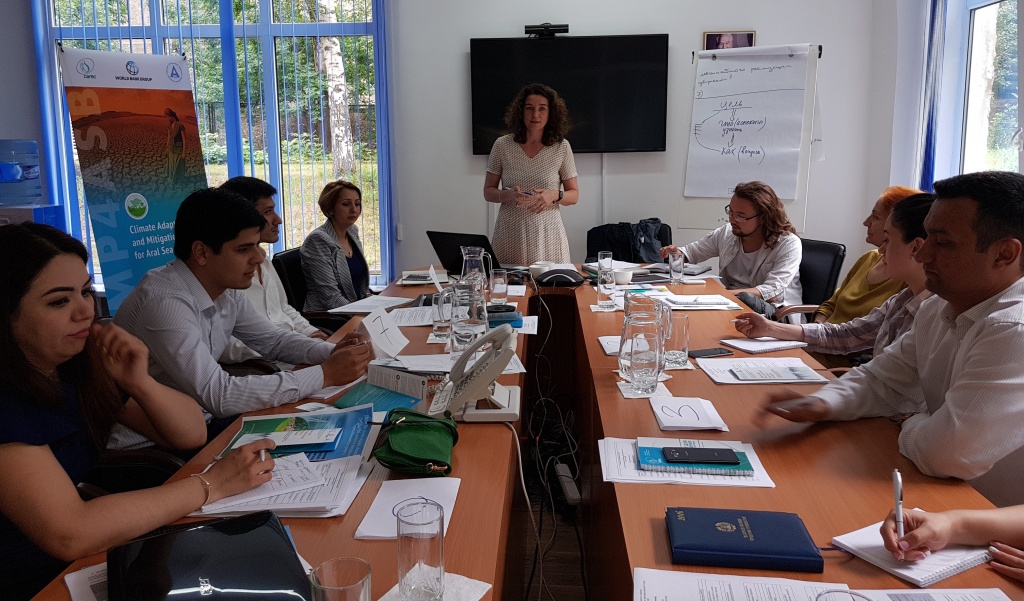 discussed indicators, roles and responsibilities, protocols and procedures for collecting and processing information on the national and regional components of the project. For more productive work of the M & E system for each of the project components, the development and implementation of a unified M & E project database will soon begin.
Also, the participants got acquainted with the methodological tool for the "focus group" survey. The most effective conditions for conducting the survey were presented, as well as the main approaches for preparing questions for the "focus group". To consolidate the material, the participants split into groups and in practice carried out an exercise to compose questions for different "focus groups".
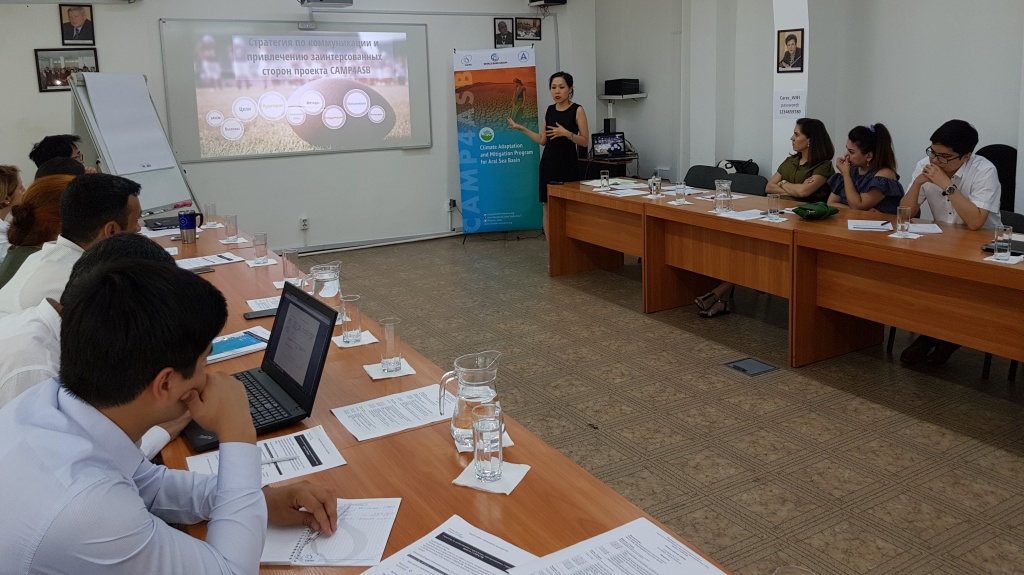 The Communications and Stakeholder Engagement Strategy (CSE Strategy) for the CAMP4ASB project was also presented. This CSE Strategy has been developed to set the strategic direction for effective communication and stakeholder engagement activities for the CAMP4ASB at the regional level. Efficient communications and stakeholder engagement are critical to the successful implementation of CAMP4ASB which aims to promote regional cooperation and climate action in Central Asian region.
By engaging effectively with key actors and stakeholders, including government representatives, civil society, research organizations, academia, media and others, CAMP4ASB will be able to facilitate dialogue, improve knowledge-base, foster understanding of the climate-change issues and – potentially – inspire wider climate-action in the region.
The Strategy sets the foundation for Communication and Stakeholder Engagement work for the 5-year period of the project, with an accompanying action plan which provides detailed guidance for implementing the strategy, including concrete actions and timelines.
Also, participants were able to apply some of the knowledge gained in practice. For example, working in groups was trained how to communicate information about the project for different audiences. A very illustrative and useful exercise in working with the media is how to properly communicate information about the project and answer journalists' questions.