



In the context of climate change, specific skills are required in order to be able to provide an accurate forecast, to predict dangerous natural phenomena - hail, showers, frosts, abnormal heat, river spills and etc. So, the professions of meteorologists and hydrologists are becoming especially demanded. And even more important is to convey to students the information about the latest and most advanced forecasting tools.
Today, our interviewee is an assistant professor at the Faculty of Natural Sciences of ENU named after L.N. Gumilev, candidate of geographical sciences Mashtaeva Shamshagul Ibrahimovna.
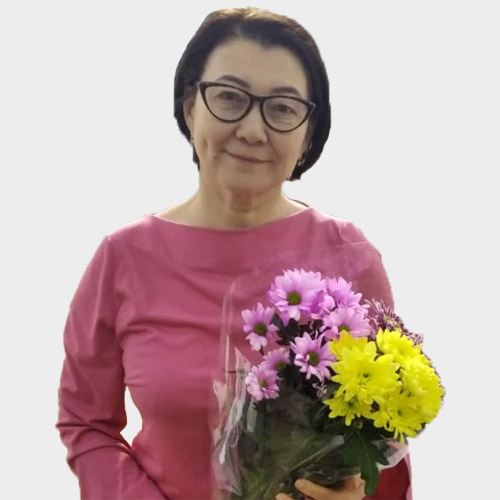
Associate Professor, Faculty of Natural Sciences, ENU. L.N. Gumilyov, candidate of geographical sciences Mashtaeva Shamshagul Ibragimovna
In Kazakhstan, hydrological engineers - specialists of the Department of Hydrological Forecasts of the Hydrology Faculty of the RSE "Kazhydromet" - are trained by only two universities. One of them is the Eurasian National University named after L.N. Gumilyov (Nur-Sultan). Today the Department of Hydrological Forecasts of the RSE "Kazhydromet" has many graduates from ENU named after L.N. Gumilyov
Shamshagul Ibrahimovna Mashtaeva is currently developing a course “Modeling Hydrological Processes” as part of the “Climate Adaptation and Mitigation Program for the Aral Sea Basin” (CAMP4ASB), implemented by the Regional Environmental Center for Central Asia (CAREC) and funded by World Bank.
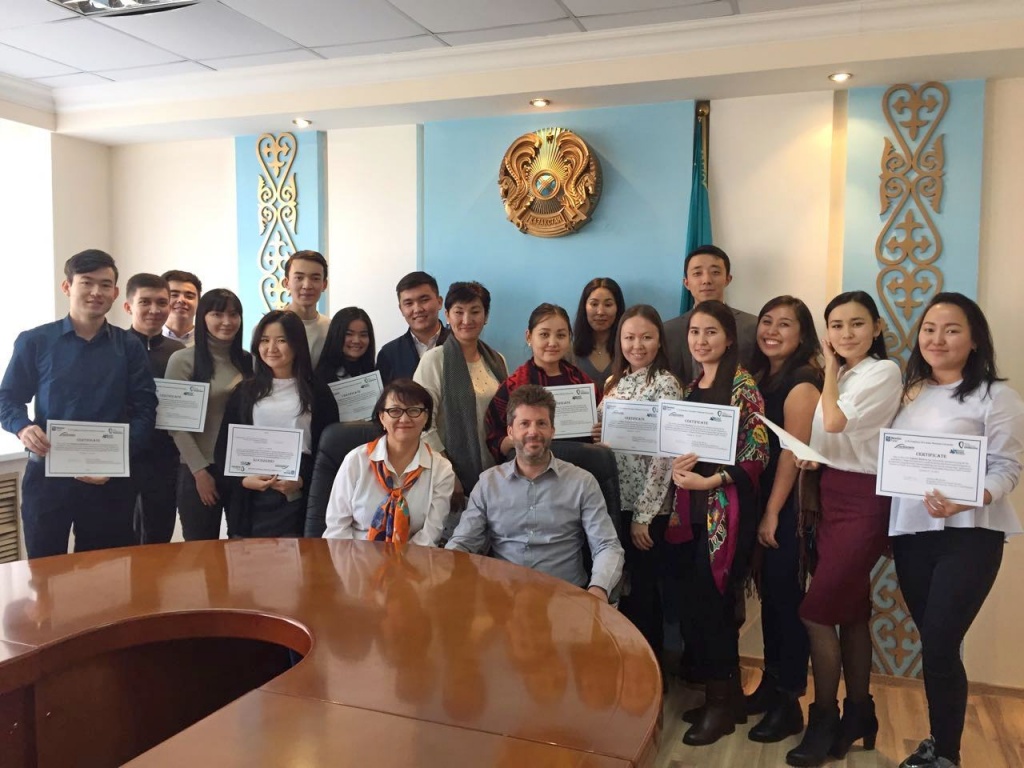
Students-hydrologists and specialists of the RSE “Kazhydromet” held an international seminar on the topic “Modeling melt runoff based on remote sensing of the earth” at ENU named after L.N. Gumilyov in the framework of the Newton al-Farabi project, 2018
This course will be introduced for 3rd-year bachelor students of the 5B061000-Hydrology educational program. The course is scheduled for the 2020-2021 academic year.
- Shamshagul Ibrahimovna, thank you for agreeing to answer our questions. Can you please share with us how did you come up with the idea to develop a course “Modeling of hydrological processes”?
- Two years ago, with the support of CAREC, as part of the CAMP4ASB project, I updated two courses:
“Long-term hydrological forecasts”,
“Environmental Issues in the Context of Climate Change”.
Hydrological and climate modeling issues have been added to those courses (a total of 13 hours of lectures).
After updating these courses, it became necessary to develop a full separate innovative course which could include more practical exercises on hydrological models (HBV, MODSNOW, SRM).
Coincidentally, CAREC announced a competition for the development of such courses among Central Asian teachers. I won the competition and now I am working hard to create a new course. I would like to add that colleagues from the Potsdam Institute for Climate Research (Germany) Dr. Julius Didovets and Dr. Anastasia Lobanova, as well as Dr. Abror Gafurov from the Earth Research Center (Germany), who work in the CAMP4ASB project, will advise me on the development of this course and share some practical skills in hydrological modeling.
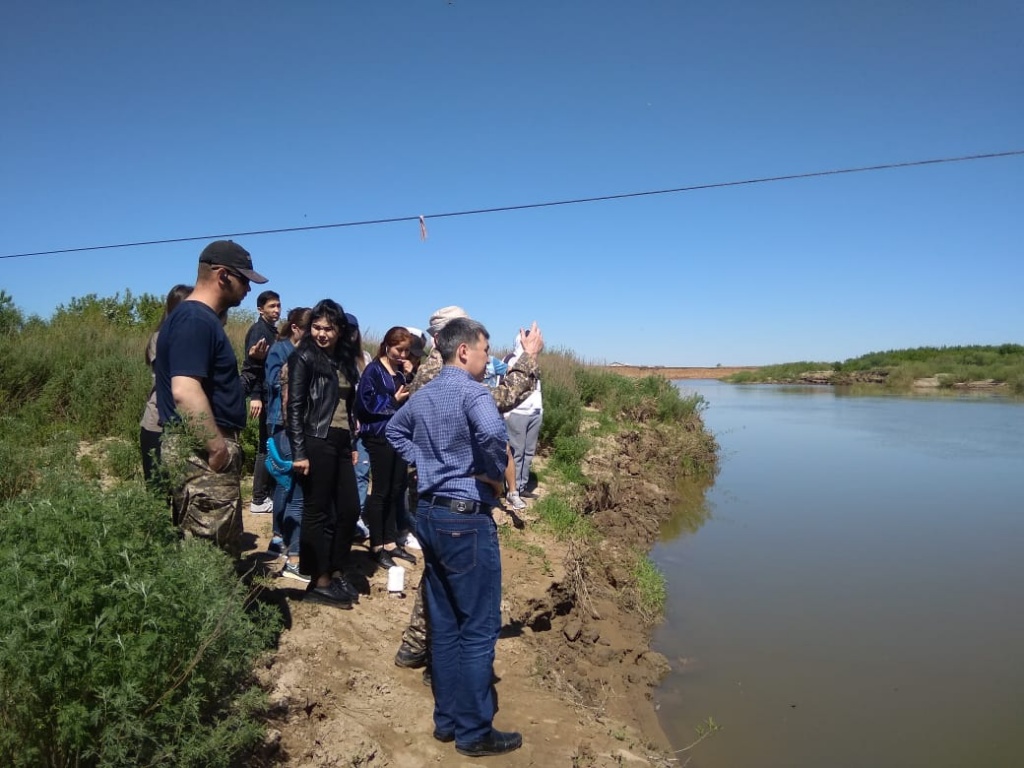
Students-hydrologists and specialists of the RSE “Kazhydromet” held an international seminar on the topic “Modeling melt runoff based on remote sensing of the earth” at ENU named after L.N. Gumilyov in the framework of the Newton al-Farabi project, 2018
- How is the course "Modeling of hydrological processes" different from everything that hydrological students are already learning at your university?
- The purpose of the development and implementation of the course "Modeling of hydrological processes" is to train student hydrologists:
The course "Modeling of hydrological processes" helps students to learn specific computer programs. Previously, the students of hydrological faculty compiled hydrological forecasts of daily runoff during the snowmelt season in a classic way. And now they are doing this on a computer using the Snowmelt runoff model program.
This course also includes the HBV and MODSNOW models.
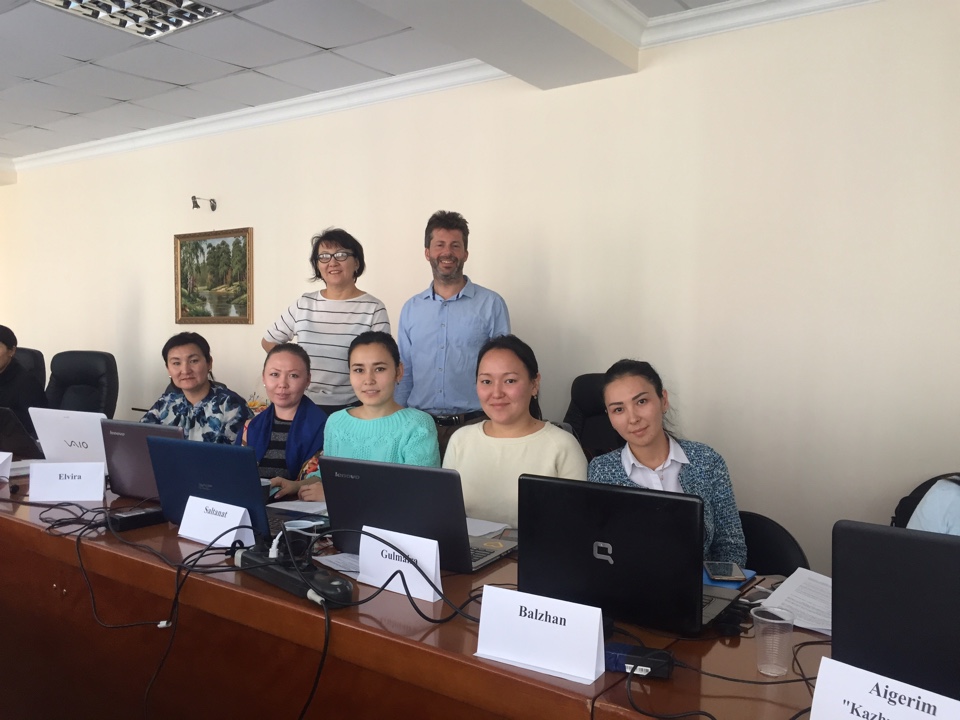
Students-hydrologists and specialists of the RSE “Kazhydromet” held an international seminar on the topic “Modeling melt runoff based on remote sensing of the earth” at ENU named after L.N. Gumilyov in the framework of the Newton al-Farabi project, 2018
- Please tell us more about these models. Where and what are they used for?
- “Snowmelt runoff model” is a microcomputer program that includes the formation of modernized decline curves, which are the ratio of snowy areas and cumulative snowmelt depths when calculating the melt runoff model.
The HBV model is a conceptual catchment model that converts precipitation, air temperature, and potential total evaporation either into snowmelt or into a drain or inflow into a reservoir.
MODSNOW is used to predict seasonal runoff based on the state of snow cover.
All three models are very famous for hydrological forecasts and are used in many countries of the world. Nowadays hydrological engineers of the Department of Hydrological Forecasts of the RSE “Kazhydromet” use the last two models. And the predictability of forecasts varies from 60% to 83%.
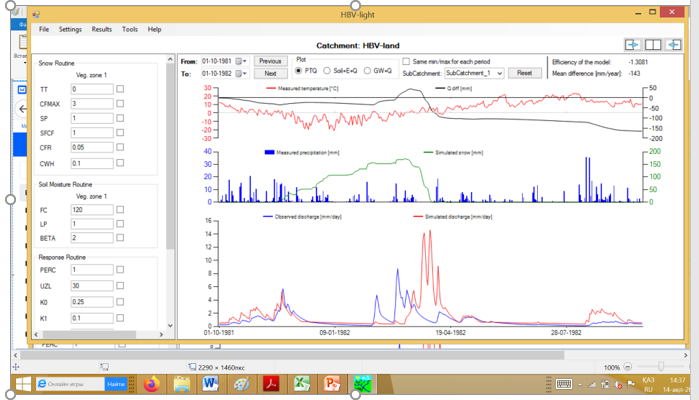
An example calculation of the HBV Light model
- In other words, the course "Modeling of hydrological processes" is the first innovative course that has never been taught before?
- Yes, this is an innovative course for students of the 5B061000-Hydrology educational program for the countries of Central Asia and Kazakhstan.
Earlier, I introduced several lectures on the “snowmelt runoff model” and practical classes for my students in the educational process.
I shared my experience at the regional conference “Scientific and evidence-based solutions for managing climate risks and increasing resilience to climate change in Central Asia”, which was held in Ashgabat in November 2019 on the topic “Experience in implementing and teaching the discipline on climate and hydrological modeling ”(organized by CAMP4ASB).
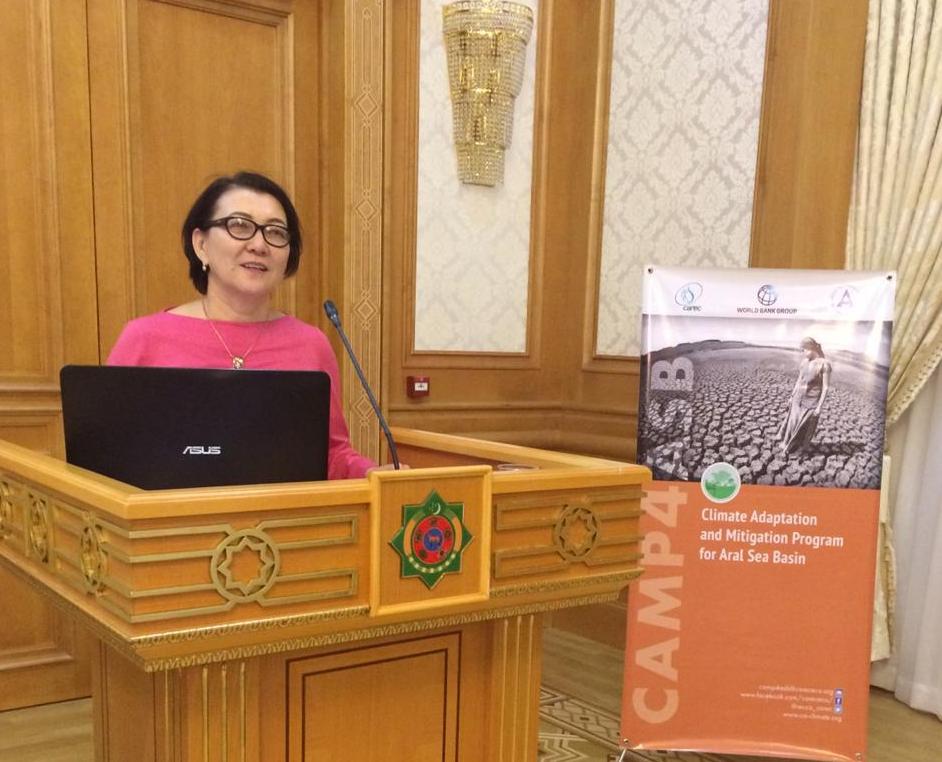
Speech at the regional conference “Scientific and evidence-based solutions for managing climate risks and increasing resilience to climate change in Central Asia”, Ashgabat, 2019.
- And if you introduce a similar course in other universities, will you provide advisory support?
- SURE!
____________________